

Conference: “Future Operations – Resilience in Transitioning Energy”

27-29 October 2026
ARTIS Centrum Hotels
Totorių g. 23 LT-01120 VILNIUS, LITHUANIA
AGENDA
Day 1 – 27th October
5:30 p.m. – 6:30 p.m.: Registration and welcome badge pickup
6:30 p.m. – 8:00 p.m.: Opening Session: Energy Security Amid Global Uncertainty
8:00 p.m. – 10:30 p.m.: Welcome Dinner & Industrial Exhibition Preview hosted by FORTE
Day 2 – 28th October
8:30 a.m. – 9:00 a.m.: Registration & Coffee
9:00 a.m. – 9:30 a.m. : Opening Remarks from:
> Minister of Defence
> Chief of Defence
> NATO ENSEC COE Director
9:30 a.m. – 11:00 a.m.: Maritime Dynamics on Energy Security
> Keynote speaker: Indispensable duo: Maritime & Energy
> Panel: Comprehensive Maritime & Energy Security Agenda
11:00 a.m. – 12:30 a.m.: Cyber & AI in Energy Systems
> Keynote speaker: Energy Security in a Changing Threat Landscape
> Panel: When Grid Meets Hack: the Energy-Cyber Nexus and AI
12:30 a.m. – 1:30 p.m. : Lunch & Exhibition Viewing
1:30 p.m. – 3:00 p.m.: Critical Infrastructure Protection
> Keynote speaker: Innovations reshaping operational energy resilience
> Panel: Hardening every grids, pipelines and supply nodes
3:00 p.m. – 3:45 p.m.: Coffe & Networking
3:45 p.m. – 4:15 p.m.: Corporate Presentation: CellCube Energy Storage
4:15 p.m. – 5:30 p.m.: Innovation and Energy
> Keynote speaker: Emerging Thermal Management Technologies: From Research Innovation to Operational Capability
> Panel: Industry and Innovation: Translating Emerging Technologies into Operational Capabilities
5:30 p.m. – 6:00 p.m.: Evening Exhibition Viewing
Day 3 – 29th October
8:30 a.m. – 9:00 a.m.: Registration & Coffee
9:00 a.m. – 10:30 a.m.: Military Energy Transition & Operational Autonomy
> Keynote: Operational autonomy & operational energy
> Panel: Operational autonomy and force resilience
10:30 a.m. – 11:00 a.m.: Coffee & Networking
11:00 a.m. – 11:30 a.m.: Corporate Presentation
> Lydian – Sustainable aviation fuels & green energy
> Ineratec – Modular Power-to-X & synthetic fuels
11:30 a.m. – 1:00 p.m.: Alternative Fuels & Strategic Energy Diversification
> Keynote: Key insights on alternative fuel adoption
> Panel: Strategic supply chain security and synthetic fuels
1:00 p.m. – 2:15 p.m.: Lunch & Exhibition Viewing
2:15 p.m. – 2:30 p.m.: Intervention: Resilience energy system in the High North
2:30 p.m. – 4:00 p.m.: Ukraine Energy Security Update
> Keynote: Future directions for alliance energy resilience
> Panel: Lessons learned, grid defense and reconstruction resilience
4:00 p.m. – 4:30 p.m.: Closing ceremony & key takeaways summary
4:30 p.m. – 5:30 p.m.: Final networking & departure
SPEAKERS
Opening Session: Energy Security Amid Global Uncertainty
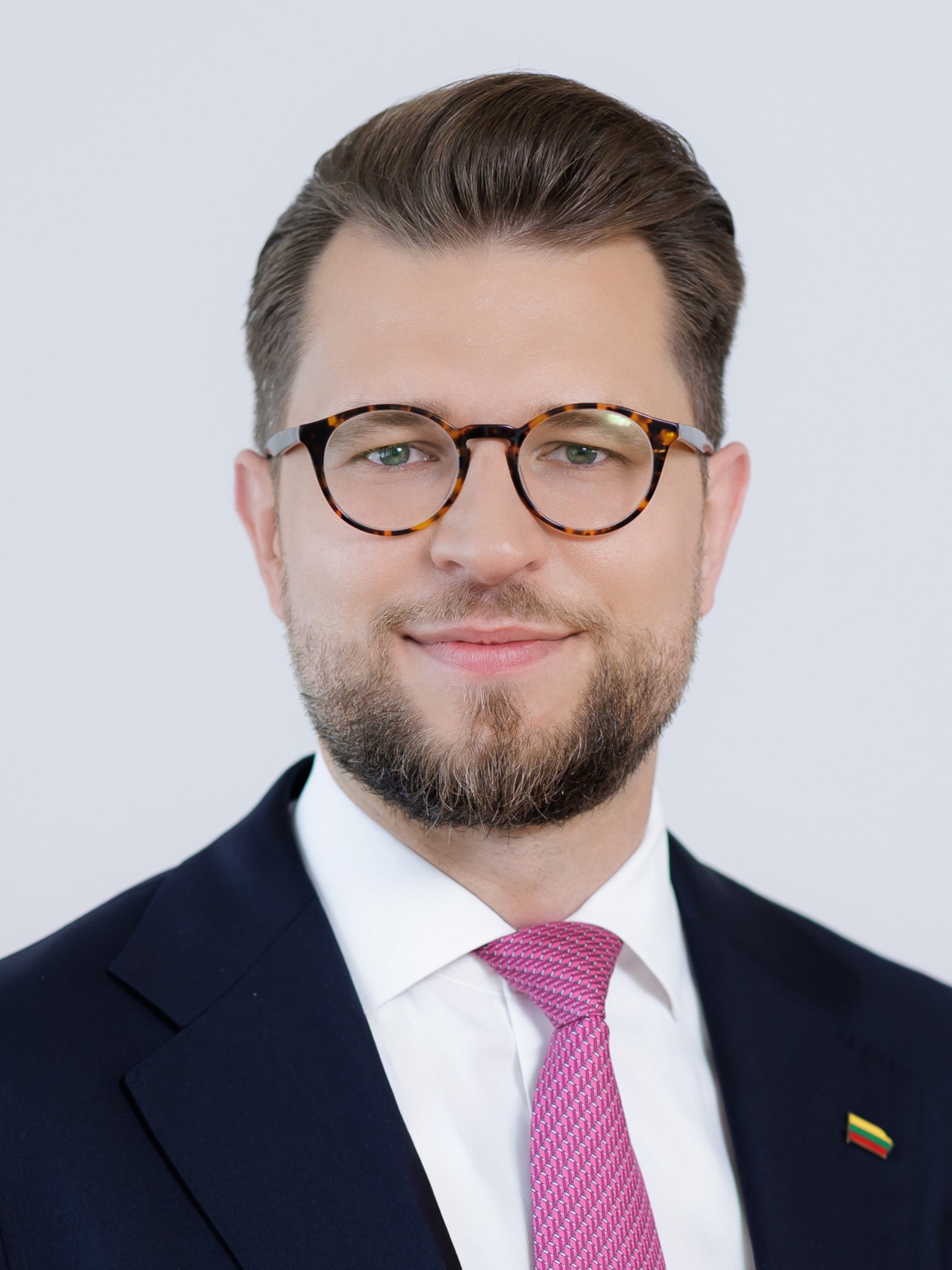
Minister Lukas Savickas
Lukas Savickas has served as Lithuania’s Minister of Energy since July 2026, having previously been Minister of Economy and Innovation. He is a member of the Seimas and its Committee on Environmental Protection. Before entering parliament, he was First Deputy Chancellor of the Government, coordinating strategic EU policy implementation, budget negotiations, and preparation of the National Progress Plan.
He is Deputy Chairman of the Democrats’ Union “Vardan Lietuvos” and a member of its board and council. Savickas holds a bachelor’s degree in politics and international relations from the University of York and a master’s degree in European public affairs from Maastricht University.

Minister Taurimas Valys
Taurimas Valys is Lithuania’s Minister of Finance, with more than 20 years of financial management experience. He is also an Assistant Professor at Vilnius University, teaching EU public finance, international finance and crises, and is pursuing a PhD in Economic Sciences.
Previously, he served as Vice-Minister of Foreign Affairs and, in 2025, as Adviser to the Prime Minister. His experience includes leadership roles in chambers of commerce, the IAEA Board of Governors, Vilnius City Municipality, a credit union and licensed fund management companies. He holds degrees in international relations and political science, law, and business administration.

Vice Minister Karolis Aleksa
Dr. Karolis Aleksa was appointed Vice Minister of National Defence of Lithuania in December 2024, after serving as Head of the Defence Policy Group. From 2021 to 2024, he was Lithuania’s Defence Adviser to NATO, having held several senior Ministry of National Defence roles since 2004.
He has lectured at Vilnius University and the General Jonas Žemaitis Military Academy of Lithuania on war studies, security policy, and conflict resolution. He holds a PhD and master’s degree in Political Science from Vilnius University, and completed the Higher Command Studies Course at the Baltic Defence College, graduating top student for academic achievement and leadership.

Viceministras Kristupas Vaitiekūnas
Kristupas Vaitiekūnas is currently the Vice Minister of Foreign Affairs of the Republic of Lithuania, overseeing the areas of economic security and economic diplomacy. Prior to his current appointment, he served as Minister of Finance and as Vice-Minister of Finance. Earlier in his career, he held positions in the fields of international taxation and transfer pricing. He holds a master’s degree in international finance and a bachelor’s degree in economics from Vilnius University.

Professor Eugenijus Valatka
Professor Eugenijus Valatka is the rector of Kaunas University of Technology since 2018. A professor of chemical engineering, he previously served as Dean and Vice-Dean of the university’s Faculty of Chemical Technology. He has supervised five doctoral graduates and authored or co-authored more than 100 publications.
He is active in several scientific and industrial associations and serves as President of Santaka Valley and Vice-President of ECIU University and the Kaunas Region Association of Industrialists and Employers. He has also served on the boards of several national and international organizations.
Opening Remarks
Vice Minister Karolis Aleksa
Dr. Karolis Aleksa was appointed Vice Minister of National Defence of Lithuania in December 2024, after serving as Head of the Defence Policy Group. From 2021 to 2024, he was Lithuania’s Defence Adviser to NATO, having held several senior Ministry of National Defence roles since 2004.
He has lectured at Vilnius University and the General Jonas Žemaitis Military Academy of Lithuania on war studies, security policy, and conflict resolution. He holds a PhD and master’s degree in Political Science from Vilnius University, and completed the Higher Command Studies Course at the Baltic Defence College, graduating top student for academic achievement and leadership.

Major General Potii
Major General Oleksandr Potii is a Ukrainian military officer and specialist in cybersecurity and information protection. Born in Kryvyi he trained as a radio-electronics engineer and earned advanced degrees in information security and technical sciences. After a long military and academic career, he became deputy head of Ukraine’s State Service of Special Communications and Information Protection in 2020. He was appointed its head in November 2024 and promoted to major general on May 20, 2026.

Colonel Gytis Kazokas
Colonel Gytis Kazokas is a Lithuanian Armed Forces officer who became Director of the NATO Energy Security Centre of Excellence in 2024. Since beginning his military service in 1992, he has served in Land Forces units, Special Operations Forces, the Military Police and the Defence Staff, and took part in missions in Iraq and Afghanistan. He graduated from the Lithuanian Military Academy and the Baltic Defence College and holds a master’s degree in political science.
Intervention: Vice-Minister of Energy

Vice Minister Karolina Štelmokaitė
Karolina Štelmokaitė is Lithuania’s Vice-Minister responsible for the energy agenda of its Presidency of the Council of the EU, international relations, consumer interests, and energy efficiency. She brings over 20 years’ experience in EU institutions, including roles with the Association of Local Authorities in Lithuania, a European Commissioner’s team, and the Greens/EFA Group in the European Parliament. She negotiated key EU energy legislation, led Parliament’s technical negotiations on the ban on Russian gas, and prepared its opinion on Ignalina funding for 2028–2034. She holds master’s degrees from the University of Kent and Vilnius University.
Panel 1: Maritime Dynamics on Energy Security
Keynote Speaker

Captain Tadas Jablonskis
Captain Tadas Jablonskis, Commander of the Lithuanian Navy, is an experienced naval officer with extensive service at sea and in senior command positions. Having been commissioned as a naval officer in 2000, he has served aboard various types of warships and commanded the Lithuanian Navy Flotilla. He played a significant role in the acquisition and integration of the former HUNT-class minehunters into the Lithuanian Navy. He also contributed to the EU NAVFOR Operation ATALANTA HQ and served as both Commander and Chief of Staff of the Baltic Naval Squadron (BALTRON).
Captain Tadas Jablonskis graduated from the United States Naval Command College in 2022. One year later, he earned a Master’s degree in National Security after completing National Security and Defence studies at Klaipėda University.
Panellists

Captain Mehmet Cengiz EKREN
Captain Mehmet Cengiz EKREN graduated from Naval Academy in 1995. Following his graduation, he served in a variety of positions both abroad and within the Turkish Fleet Command, gaining extensive operational and staff experience. His NATO assignments included serving as the TAAC-Capital Liaison Officer (LNO) to the NATO Resolute Support Mission in Kabul, Afghanistan, and as Assistant Chief of Staff (ACOS) J5 at STRIKFORNATO.
Upon his return, he was assigned to the Turkish Naval Forces HQ, where he served as Director of the Strategy Department for three years. In July 2023, he assumed his latest position as Director of the Maritime Security Centre of Excellence (MARSEC COE). Captain EKREN holds a Master of Science (MSc) degree in Maritime Transportation Engineering (Naval Machinery). He is also pursuing a PhD in Maritime Security at Istanbul Technical University.
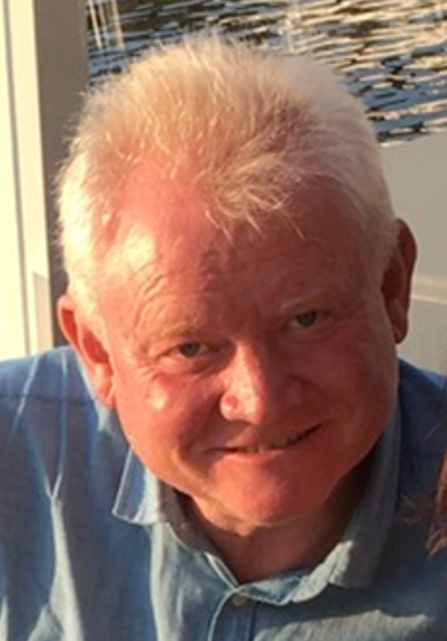
Per Olav Foss
Having graduated from the Norwegian Naval Academy in 1987, Per Olav Foss served as a submarine officer for several years before taking different positions at the Norwegian National Joint HQ. He also served during “Operation Desert Storm” in the Persian Gulf in 1991.
He joined Equinor in 2009 and has had different leading positions both in Operations and Projects and is currently holding the position as Senior Advisor Marine Security. In 2018/19 he had 5 months’ leave from Equinor to serve at NATO’s maritime Headquarters (MARCOM) in Northwood UK as a reservist staff officer at the NATO Shipping Centre.

Dorien Stroeve
Dorien Stroeve is mechanical engineer at the Department of Maritime Systems of the Dutch Materiel and IT Command since 2019. She is researcher and requirement engineer on power, propulsion and energy technology for the replacement fleet of the Royal Netherlands Navy.
Her main contribution is on sustainability, energy security and fuel flexibility, with a particular focus on the implementation of alternative fuels in engines or fuel cells, and their implication on naval operations. She is subject matter expert on methanol as marine fuel, which will be one of the fuels for the replacement auxiliary vessels of the Royal Netherlands Navy.

Dr. Thomas Beard
Dr Thomas Beard is BMT’s Clean Energy & Future Fuels Growth Initiative Lead. He holds a PhD in Hydrogen Safety from Loughborough University, is a Chartered Engineer and has over a decade of experience across alternative fuels, covering vessels, shoreside infrastructure and fuel production. Thomas is active across industry working groups and academic advisory boards, including as co-chair of the IMarEST Ship Energy and Environment Group, and has published and presented extensively on naval energy.
Panel 2: Cyber & AI in Energy Systems
Keynote Speaker

Marco Criscuolo
Marco Criscuolo is NATO’s Director of Strategy and Policy in the Cyber and Digital Transformation Division. He leads strategy and policy efforts to advance the Alliance’s agenda on cyber defence, digital transformation, and countering hybrid threats, including in the fields of energy security and critical undersea infrastructure. From 2021 to 2025, he served as Deputy Director of NATO Digital Staff, advancing digital policies, standards, governance, and management. Previously, he held senior roles in security and policy within NATO.
He joined NATO in 2006 following a career as an Italian Air Force officer, with roles in digitalisation and information management across the Air Force Staff, the Italian Ministry of Defence, and NATO. He holds a Master of Science Degree in Technology Management and a second-level Master in Geopolitics, Economic Globalization and International Institutions.
Panellists

Erika Langerová
Erika Langerová currently serves as Deputy Security Director at the Czech Technical University in Prague (CTU) and at CTU UCEEB as Head of the Strategic Infrastructure Security Department and founder of the Competence Centre for Resilience.
Her work connects the cybersecurity and physical security of energy systems with broader issues related to hybrid threats, economic and regulatory pressure, and cross-border technological influence. She contributes to research, development, and analysis in the field of security, supports activities for national and European regulators and NATO, and is also involved in crisis scenario modelling for energy infrastructure.

Ruben Santamarta
Ruben Santamarta is an independent European security researcher with over 20 years of experience in the industry.
His main areas of expertise are reverse engineering and cyber-physical systems, such as nuclear/radiation systems and the power grid.

Dr. Enrique Kremers
Dr. Enrique Kremers is an expert in the simulation of complex systems, currently working as Program Manager for Critical Energy Infrastructure at IABG in Germany. With over 15 years of experience in senior roles, such as Head of Complex Systems Research at the European Institute for Energy Research and Scientific Advisor for EDF he is specialized in developing innovative solutions for energy, infrastructure, and operations using simulation methods and digital twins.

Siim Kurvits
Siim Kurvits is an Estonian cybersecurity professional and Chief Information Security Officer at the Estonian Defence Forces Cyber Command. He has worked with NATO partners and technology and research organisations on cyber situational awareness, capability development, and product security.
He holds CISSP certification and an MSc in Computer Science, and is currently pursuing a PhD at the University of Tartu. His research looks at the use and governance of sensitive health and genetic data, including machine learning.
Panel 3: Critical Infrastructure Protection
Keynote Speaker

Mr. Julijus Grubliauskas
Julijus Grubliauskas leads NATO HQ Brussels’ Energy Security Team in the Hybrid Strategy and Policy Section, advising NATO leadership on energy issues and developing its energy security agenda. In 2023, he was assigned to establish NATO’s Critical Undersea Infrastructure Coordination Cell. Previously, in NATO’s Political Affairs and Security Policy Division, he focused on defence economics. Before joining NATO’s International Staff in 2009, he was a Lithuanian Government energy security analyst and researched and lectured at Vilnius University.
A Lithuanian citizen, he holds BA and MA degrees in International Relations and Political Science from Vilnius University and completed the NATO Executive Development Programme. He regularly lectures on energy security at NATO’s colleges and centres in Rome, Oberammergau, Tartu, and Vilnius.
Panellists
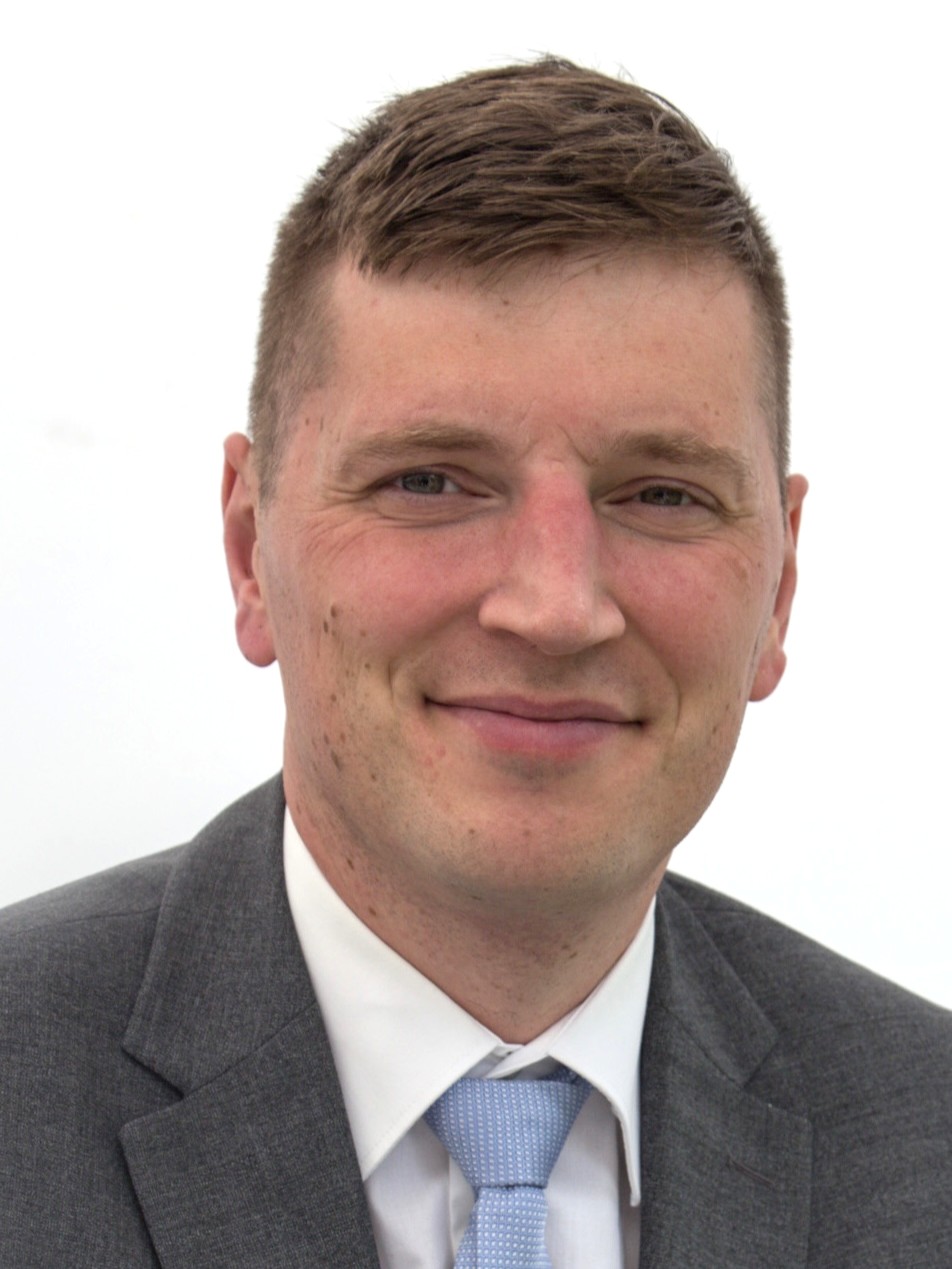
Adrien Dubus
Adrien Dubus is Principal Projects Officer (Infrastructure) at the CEPS Programme Office, responsible for France, Belgium and Luxembourg. A graduate of Saint-Cyr, he served 12 years as a French Army combat engineer, including overseas deployments. After graduating from the Institut Français du Pétrole, he joined the French Joint Military Fuel Service, specialising in procurement strategy and ERP systems. His operational assignments included French Guiana and Chad, where he managed fuel supply to French forces in the Sahel. Following the French War College, he joined CEPS PO, focusing on pipeline maintenance, development and resilience.
As France’s Host Nation representative, he has particular responsibility for CEPS Resilience and Repair Capabilities (CRRC).

Lennaert Jonkers
Lennaert Jonkers is the Founder and Managing Director of DevelopMinded B.V., a deep-tech valorisation and advisory firm that has supported more than 1,000 ventures. He advises governments and industry on dual-use innovation and defence capability-building and serves as an evaluator for European and international defence initiatives and the European Commission’s JRC. He is a NASA Centennial Challenges Judge, a member of DARPA’s LOGIC initiative, and a World Economic Forum expert.

Mikkel Andersen
Mikkel Andersen left the Danish Navy in 2022 after 31 years’ service, retiring as a Commander. He continues his commitment to the Navy as a reserve officer, working within the area of Critical Maritime Infrastructure. His military career spans service at sea, the Navy Operational Command, the special operations community and the intelligence community, including a posting as Liaison Officer at US Central Command.
In his civilian career, Mikkel first worked for Ørsted and later joined New Power Partners, a Danish company that provides experts to renewable energy projects. He has designed and implemented physical security, cyber security and resilience for offshore wind farms, including protection against drone threats and the co-existence of wind farms with defence capabilities. This includes projects in the Baltic Sea.

Ilze Angere
Ilze Angere is a Research and Analysis Officer at the NATO Climate Change and Security Center of Excellence since 2024. Before joining CCASCOE she was working for the Ministry of Defence of Latvia in different positions. Her main expertise lays in the fields of logistic and acquisition. She has been the Director of Logistics policy department, the Inspector General at the Latvian MOD, had worked in Latvia Delegations to NATO and the EU in Brussels.
Ilze holds a professional degree in Law, a Master in Science (Biology) and a Master in Business Administration. At FORTE 2026 she will speak on the findings of the CCASCOE Arctic project regarding the climate change impacts on infrastructure in the Arctic.

Aleksander Olech
Aleksander Olech, PhD – Head of International Cooperation at Defence24 Group and Editor-in-Chief of Defence24.com. Lecturer at Polish and international universities, NATO associate, analyst, and publicist. He has cooperated with NATO Centres of Excellence in Riga, Vilnius, Tallinn and Ankara, working on hybrid threats, strategic communication, cyber security, counter-terrorism, and allied security.
Former Deputy Director at the Polish Ministry of Foreign Affairs. Graduate of the European Academy of Diplomacy and the War Studies University, where he obtained a PhD in Security Studies. His main research interests include NATO security policy, Russian hybrid activities, French-Russian relations, security on NATO’s eastern flank, cyber and information threats, and political and military developments in Africa..

Žygimantas Vaičiūnas
Žygimantas Vaičiūnas is an energy policy expert and former Lithuanian Minister of Energy, with over 20 years’ experience shaping national and European policy, advancing strategic infrastructure, and strengthening energy security. Minister across three Governments, he has held senior roles in Lithuania’s Government, its Permanent Representation to the EU, and the European Solar Manufacturing Council in Brussels. He has contributed to Baltic electricity-grid synchronization with Continental Europe, renewable energy development, and battery storage deployment, and advocates an EU framework to strengthen energy infrastructure resilience. He holds degrees in Political Science and European Studies from Vilnius University.
Panel 4: Innovation and energy
Keynote Speaker

Professor Hussam Jouhara
Professor Hussam Jouhara is Chair of Thermofluids at Brunel University London, a Fellow of the Royal Academy of Engineering, and Technical Director of Econotherm (UK) Limited.
He is an internationally recognised authority on heat pipes, waste heat recovery, and sustainable thermal technologies, he has led more than 18 million Euros in funded research and published over 200 journal articles and many books. His patented innovations have progressed from laboratory concepts to commercial systems deployed at more than 600 sites across 32 countries, helping major industries reduce energy consumption and carbon emissions.
Panellists

Annabelle Livet
Annabelle Livet is a researcher at FRS and a PhD candidate at the Geography Institute of the University of Paris 1 – Panthéon-Sorbonne, supervised by Professor Yann Richard. Her research focuses on energy security, including supply security, critical infrastructure protection, and the energy sector’s industrial aspects, with particular emphasis on technology dependencies and their implications for Europe.
She also covers topics related to operational energy for armed forces, energy warfare, civilian–military cooperation, energy resilience, and multi-level governance between European states, the European Union, and NATO. She has worked on these issues with the French Ministry of Armed Forces on several projects for the last five years.

Grace Quan
Grace Quan is President and CEO of Hydrogen In Motion Inc. (H2M), advancing the commercialization of breakthrough solid-state hydrogen storage technology. A CPA and MBA, she combines technical vision with disciplined financial leadership shaped by experience in private enterprise, government, and oversight of Canada’s $250-billion federal budget at Treasury Board.
Grace is also a recognized hydrogen-sector leader, serving with the Canadian Hydrogen Association, the Sustainable Energy Council (UK), and as Chair of Canada’s national Codes and Standards Working Group for Hydrogen Storage and Transport. A champion for equity and women in STEM, she leads Equal by 30 initiatives and was named one of BC’s 50 Most Influential Women in STEM.

Andrew Pang
Andrew Pang is an Assistant Vice-President (Business Development) at ST Engineering Land Systems. In his current role, he leads the development of energy solutions that deliver reliable, mobile power where it is needed most. Before joining ST Engineering, Andrew was an Assistant Director at the Prime Minister’s Office, where he contributed to key national initiatives, including Singapore’s energy transition strategy and national electric vehicle roadmap.
Before moving into policy, planning and business development, Andrew spent about a decade in research. He holds a PhD in Engineering from Nanyang Technological University, where his research focused on developing advanced fluid dynamics models, and a B.Eng. in Mechanical Engineering from the same university.

Tristan Bannon
Tristan A. Bannon serves as Chief Commercial Officer at CellCube Energy Storage, where he leads global commercial strategy, project development, sales and marketing, strategic partnerships, and external affairs. Prior to joining CellCube in 2025, he was Executive Director for Resilient Energy Infrastructure at Leidos (Fortune 500, USD 16 billion), directing energy storage, microgrids, EV infrastructure, and grid modernisation programmes worldwide.
Earlier, he held senior executive roles in energy and defence technology at CACI International and Lockheed Martin. An expert at the intersection of energy policy and national security, Tristan currently resides in Vienna, Austria.

Laurynas Jokužis
Laurynas Jokužis is the CEO of Elinta Motors, with over 15 years of experience in the electric mobility industry. Passionate about innovation and sustainable transport, Laurynas focuses on accelerating vehicle electrification and strengthening Europe’s position in the global e-mobility industry.
Intervention: Resilience energy system in the High North

Hellmark Knutsson
Helene Hellmark Knutsson is Governor and Head of the County Administrative Board of Västerbotten, Sweden, since August 2020. She has a broad background as a politician and leader from national, regional and municipal levels. Helene has been member of parliament and deputy chair of the Committee of Industry and Trade.
Between 2014 and 2019 Helene was minister for Higher education and research. Before that, she was county council commissioner and group leader of the Social Democratic Party in Stockholm County Council. She has also been chair of the Municipal executive board, municipal commissioner and group leader of the Social Democratic Party in Sundbyberg
Panel 5: Military Energy Transition & Operational Autonomy
Keynote Speaker

Alan R. Howard
Alan R. Howard is Chair of the Energy Academic Group at the U.S. Naval Postgraduate School (NPS) in Monterey, California. Since joining NPS in 2009, he has focused on energy security, operational energy, contested logistics, and critical infrastructure resilience. He also directs NPS’s NATO Partnership Training and Education Centre, supporting international defense education and cooperation. Previously, he spent 15 years in international shipping and logistics.
He holds degrees from Wheaton College and Thunderbird School of Global Management and co-authored Operational Energy (2024).
Panellists

Yagmur Torul Yurek
Mrs Yagmur Torul Yurek is an Energy Security and Climate Change Staff Officer in the Joint Engineering Division (JENG) at Supreme Headquarters Allied Powers Europe (SHAPE), contributing to efforts to strengthen military energy security. Previously, she worked at Türkiye’s Energy Market Regulatory Authority (EMRA) from 2014, focusing on electricity-market licensing, regulatory frameworks, legislation drafting, and renewable-energy project evaluation.
She holds B.Sc. and M.Sc. degrees in Industrial Engineering and a Ph.D. in Management Information Systems from Gazi University. Her research covers hybrid renewable-energy systems, sustainability metrics under uncertainty, and energy-system resource allocation.

Colonel Robert Šipec
Colonel Robert Šipec has over three decades of experience in defence logistics, armament programmes, and sustainable energy. Since joining the Slovenian Armed Forces in 1992, he has held senior tactical, operational, and strategic roles, including Chief of J4 at Force Command and the General Staff, Deputy National Armament Director, and service in NATO’s KFOR and ISAF missions.
As Head of Slovenia’s Ministry of Defence Energy Efficiency and Green Transition Division, he leads initiatives on energy resilience, renewable integration, and hydrogen technologies within the security sector. He co-moderates the Consultation Forum for Sustainable Energy in Defence and Security Sector in Europe, evaluates for NATO DIANA, and serves as Vice-Chair of the Slovenian Partnership for Energy and Environment in Defence Sector (SiEnE).

Justin Tamasauskas
Justin Tamasauskas is a senior research engineer with Natural Resources Canada at the CanmetENERGY in Varennes Research Centre. Since joining the organization in 2011, Justin has been involved in a variety of projects aimed at reducing diesel dependency in both fixed infrastructure and mobile platforms. He currently supervises a team of engineers working to identify, test and evaluate operational energy solutions for Canadian forces and NATO partners across land and sea domains.
Justin holds a B.A.Sc from Queen’s University and an M.A.Sc from Concordia University, with a focus on heat transfer and thermodynamics.

John R. Cummings
John Cummings is a defense and logistics professional with military service in both the U.S. Army and U.S. Marine Corps. He later served in the U.S. civil service with the Naval Air Systems Command and the Defense Logistics Agency Energy, where his work focused on air station fueling infrastructure, defense petroleum infrastructure, and fuel planning. He also served as a liaison to U.S. European Command and NATO.
As a U.S. Navy and DLA Energy representative, Cummings participated in the NATO Petroleum Handling Equipment Working Group (PHEWG) and served as its chairman. He currently works as a consultant with the NSPA POL Facility at the Allied Command Transformation (ACT) Logistics & Sustainment Branch, supporting development of the NATO Fuel Supply Chain Conceptual Planning Process (FSC CPP) and its related lines of work.
Panel 6: Alternative Fuels & Strategic Energy Diversification
Keynote Speaker & Panellist

Air Vice-Marshal Ange Baker
Air Vice-Marshal Ange Bakers tudied Economics and German at Leeds University in London and joined the RAF as a logistics officer in 1996. Her career has included operational deployments to Kosovo, Bosnia, Iraq and Afghanistan. She has served in senior staff and command roles, including commanding 44 Mobile Air Movements Squadron and the Airport of Embarkation Wing at RAF Brize Norton during the redeployment from Afghanistan.
Promoted to Air Commodore in 2021, she led Defence Operational Energy and Futures within Defence Support before moving to Defence Equipment & Support (DE&S). In 2025 she became the RAF’s Principal Logistician, and in February 2026 was promoted to Air Vice-Marshal and appointed Director Logistics and Support Authority within the National Armaments Director Group.
Panellists

Mariano Berkenwald
Mariano Berkenwald is Head of Strategy at INERATEC, where he leads the company’s government relations and strategic business development. He has more than ten years experience in clean energy and energy security, and previously led Breakthrough Energy’s work on clean molecules in Europe, and worked at the International Energy Agency’s Global Energy Relations and Energy Data Centre team.
He is a Chemical Engineer by training, and has a master in Petroleum Economics from France’s IFPEN.

Matteo Mirolo
Matteo Mirolo is Director, Europe at Lydian, a technology company developing low-cost, turnkey plants for the production of synthetic fuels. He leads Lydian’s European strategy and engagement, working across policy, business development, and industry partnerships to accelerate synthetic fuel deployment. He brings deep expertise in European energy policy, political advocacy, and project finance, with a particular focus on the policy frameworks needed to scale next-generation fuels.
He has also served as a reserve officer in the French Air Force, where his work focused on energy security and the strategic role of resilient fuel supply.

Lieutenant Colonel D. M.
Lieutenant D. M. is the military Fuel Subject Matter Expert at Supreme Headquarters Allied Powers Europe (SHAPE). After 32 years in France’s Joint Operational Energy Service, he deployed to SHAPE in summer 2024. He served in overseas operations in Africa and the Balkans as a detachment chief and later as Joint Deputy for Petroleum Supply in French Joint Theatre Commands.
He holds an MBA with a major in Supply Chain and a University Technology Diploma in Chemistry. Since joining SHAPE, he has contributed to several projects, notably NATO’s Fuel Supply Chain Capability Programme Plan. He supervises analysts covering Readiness and Requirements, Capability, Infrastructure, Training, and Strategic Analysis.
Panel 7: Ukraine Energy Security Update
Panellist

Milena Komar
Milena Komar has over seven years’ experience in international development, energy policy and executive search. From 2019 to 2026, she served as Director of the Kyiv School of Energy Policy (KSEP), building strong relationships with senior leaders across Ukraine’s energy and industrial sectors. She holds a master’s degree in business development and a bachelor’s degree in sociology from Kyiv-Mohyla Academy.
Milena is Founder and Partner of Capitalent Network, an executive search and human capital advisory firm supporting Ukraine’s energy and industrial companies. She leads C-suite recruitment, team-building and leadership development, and advises international organisations and investors entering Ukraine’s energy sector.

Malene Hein Nybroe
Malene Hein Nybroe is a Danish energy and preparedness expert with extensive experience in energy planning, gas infrastructure, and emergency readiness. Since 2019, she has led the Preparedness Division at the Danish Energy Agency, following senior roles at Energinet.
A NATO expert in energy, she has contributed to international cooperation on energy security and resilience, including work with Baltic and regional initiatives. Her career also includes long-term energy planning projects in Lithuania. She holds an engineering degree from the Technical University of Denmark and a Master’s in Management of Technology from Aalborg University.

Major Ruslan Antoniuk
Major Ruslan Antoniuk is the Future Operations Planning Officer in LITPOLUKRBRIG’s S-6 Section. He plans digital infrastructure for future missions and supports interoperable communications, modern command-and-control systems, and NATO standards.
Since joining the military in 1997, he has held communications and IT command and staff roles. He has combat experience in eastern Ukraine since 2014 and served as Chief of Communications in artillery formations, sustaining resilient networks and automated fire-control systems under enemy fire and electronic warfare. He holds a degree in Management of Organizations and has completed specialized staff and NATO-standard courses.

Andrii Akhmedov
Andrii Akhmedov works to protect critical infrastructure in Ukraine’s Zhytomyr region, coordinating key agencies and supporting operators at their facilities. His expertise includes infrastructure resilience, physical security, interagency cooperation, and practical measures to address evolving threats.
He shares Ukraine’s wartime experience at international seminars and working meetings and participates in educational courses. His work also focuses on developing the regional protection sector and strengthening cooperation with European and international partners.
POC: e-mail: forte@enseccoe.org