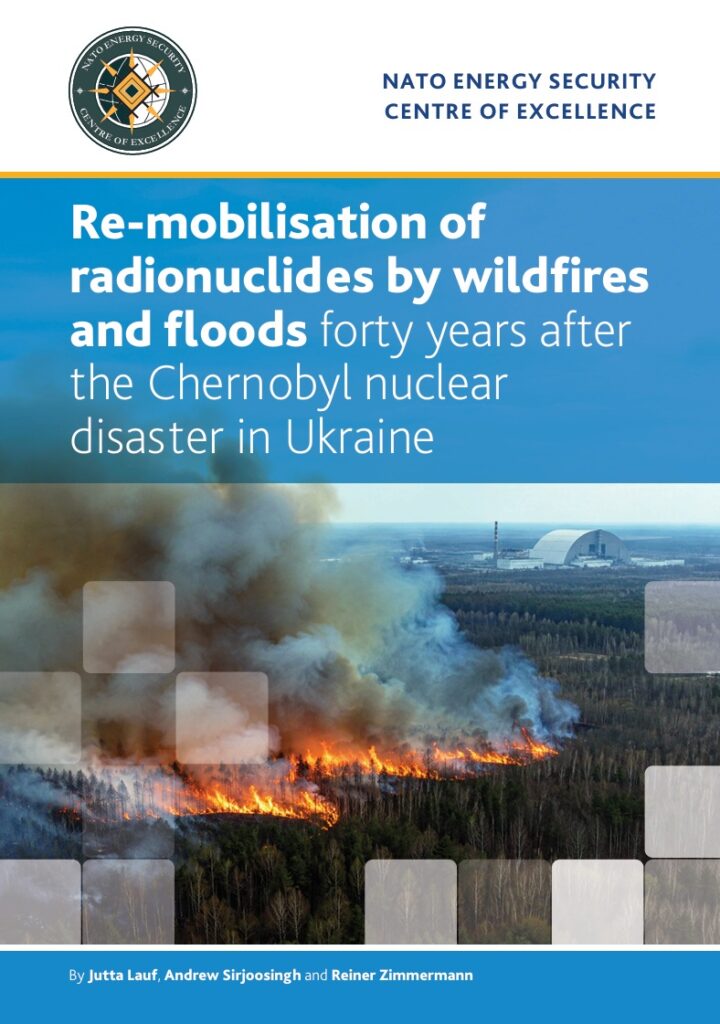

The explosion of Reactor 4 on 26 April 1986 released radionuclides across Ukraine and beyond. Four decades later, radioactive contamination remains in parts of the Chornobyl Exclusion Zone, including caesium-137 and strontium-90. Wildfires, flooding and changes in water movement can disturb contaminated soils and potentially redistribute radioactive material.
The article “Re-mobilisation of radionuclides by wildfires and floods forty years after the Chernobyl nuclear disaster in Ukraine” examines how fires and flooding could remobilise radionuclides in the Chornobyl Exclusion Zone, and what that may mean for environmental monitoring, civilian protection and military planning. It considers the region’s geography and land cover, anticipated climatic changes, the behaviour of caesium-137 and strontium-90, and evidence from past events.
The article also explores the potential for radiological concerns to be exploited through coercion or deniable hybrid activity. The question is not whether every disturbance will create a major health threat, but how to assess and manage risks that vary by location and event.
Download the publication here